Our Blog2025-08-30T17:33:00-07:00

Recent Posts

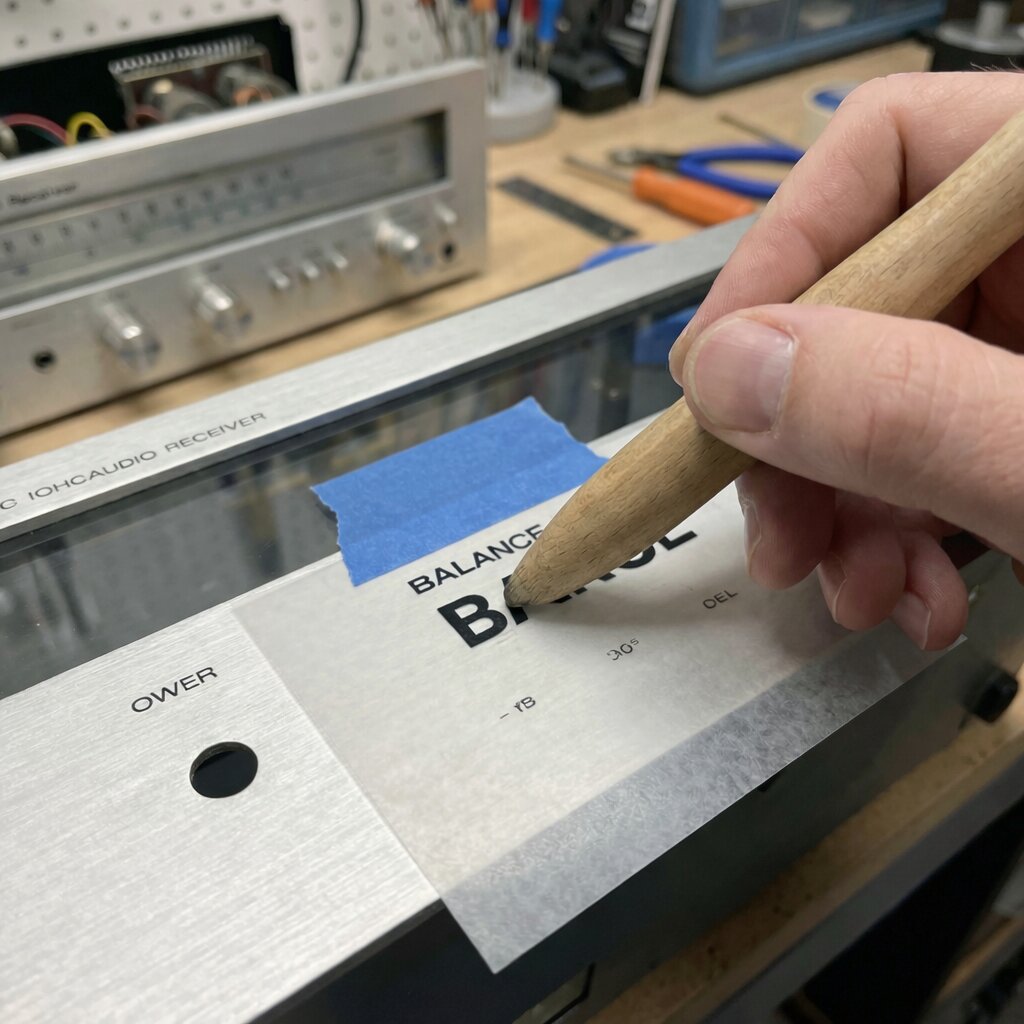
  • A person using a wooden stylus to burnish dry transfer lettering onto a vintage audio receiver faceplate.

How to Restore Vintage Audio Lettering Without Decal “Ghosting”

How to Restore Vintage Audio Lettering Without Decal "Ghosting" The secret to restoring vintage audio lettering without the telltale "ghost" outline is using dry transfer lettering instead of waterslide decals. Unlike waterslides, which leave a visible clear carrier film around each letter, dry transfers deposit ink directly onto the metal surface with no film at all. The result mimics the original factory silk screening—just pigment bonded to aluminium, with no border or sheen difference to betray the repair. Dry transfers (also called rub-on transfers) work through pressure rather than water. You position the transfer sheet over your faceplate, burnish the back with a stylus or smooth tool, and the ink releases from its carrier and adheres to the metal. When you peel the [...]

  • A close up of a wood grain texture on a wall.

Museum Placards

Museum Placards, Labels & More: Rub-on Transfer Lettering for Walls and Art Galleries What are Museum Placards Museum placards are essential tools in any art gallery or [...]

  • A silver rub down transfer on a gray background.

Spoon and Ball Point Burnisher

Spoon and Ball Point Burnisher Is our preferred tool for applying rub on sticker decal transfers. The spoon burnisher has a large contact surface area and the burnisher’s [...]

  • A custom rub on transfer of a white stone knife on a grey background.

Bone Folder as a Burnisher

Bone Folder as Burnisher The Bone Folder’s edges are narrow & only slightly rounded but the surface contact area is adequate for applying Dry Rub On Transfer Decals. [...]

Go to Top